
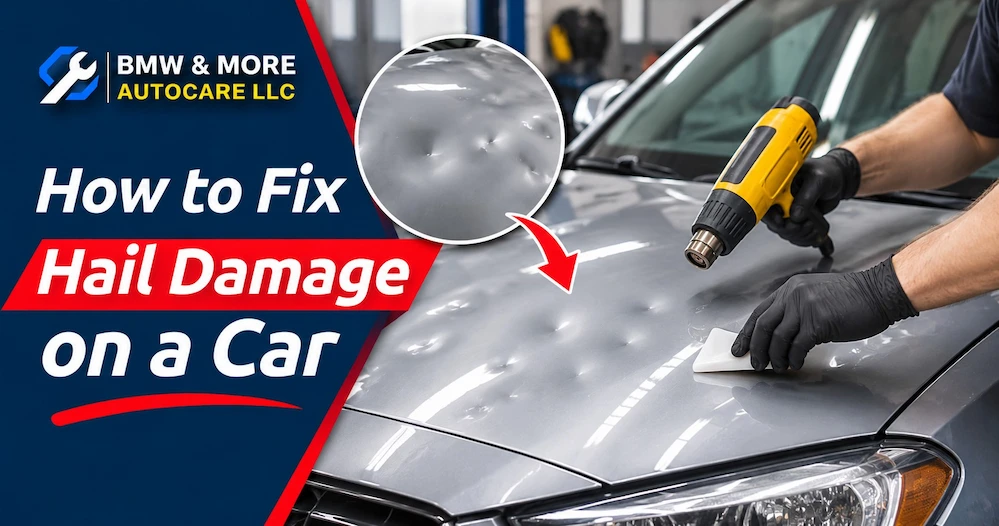
A hailstorm can leave your car covered in dents before you can move it to safety. You might notice small marks across the hood, roof, and trunk, but fixing hail damage on a car isn’t always straightforward. Some dents look harmless, while others may affect the paint or require more extensive bodywork. Finding the right auto repair solution can be difficult when you’re unsure how serious the damage is or what it will cost.
Fortunately, hail damage does not always mean replacing entire body panels or repainting your car. Options such as paintless dent repair (PDR) and body filler repair can address different levels of damage, depending on the condition of the metal and paint. Understanding how these methods work can help you choose the right approach for your vehicle.
Before scheduling an auto repair, it helps to know what your insurance may cover, how much the work could cost, and which repair method suits your car. This guide explains the available options, their benefits and limitations, and practical ways to protect your vehicle from future hailstorms.
Hail Damage on Cars
Hail damage may require several common auto body repairs, from dent removal and paint refinishing to panel replacement, depending on its severity. Knowing your options can help you choose the right fix.
Paintless Dent Repair (PDR)
Paintless dent repair (PDR) has grown in popularity over the years, changing how technicians remove dents from vehicles without disturbing the original paint. As the name suggests, “Paintless dent repair is a specialized method for restoring cosmetic sheet-metal damage. A technician must assess whether it is suitable for the individual dent.”
This cost-effective, efficient repair method uses special dent-removal tools to push the damaged metal back into shape from underneath the body panel, without fillers, sanding, or repainting. For dents that require an outward pull, technicians may use a dent puller tool to restore a smooth appearance while preserving the vehicle’s original factory paint finish.
How PDR Works
Paintless dent repair follows a careful process to reshape damaged metal while keeping the original paint intact.
1. Accessing the Dent: Technicians remove interior panels or use small access points to reach the damaged area without affecting nearby components.
2. Massaging the Metal: Using specialized tools, they gently push or pull the dented metal back toward its original shape without cracking the paint.
3. Final Touch-Ups: After reshaping, technicians inspect the repaired area to check for uneven spots and ensure the dent blends smoothly with the surrounding surface.
Benefits of PDR
Paintless dent repair offers several advantages, especially when hail damage hasn’t affected the vehicle’s original paint.
1. Keeps Factory Paint: PDR restores the damaged metal without sanding, filling, or repainting, helping preserve the original factory finish.
2. Cost-Effective: Since the process requires fewer materials and less intensive labor, it can cost less than traditional dent repair.
3. Fast Turnaround: Most PDR jobs can be completed within a day or two, getting your vehicle back on the road sooner.
Limitations of PDR
Paintless dent repair works well for most hail dents, but certain damage can make it unsuitable. Cracked or chipped paint and sharp dents usually require traditional body filler and repainting to properly restore the panel.
As Universal Technical Institute’s curriculum shows, “steel, aluminum, stretched metal, and damaged finishes can require different repair procedures.” PDR also depends on the metal’s flexibility and the paint’s condition, so damaged surfaces may not respond well. Aluminum panels are harder to reshape than steel, which can make PDR more difficult or ineffective.
Body Filler Repair
When hail leaves deep dents or damage that PDR cannot correct, body filler repair offers another way to restore the affected panels. A popular product in this category is Bondo, a trademark name commonly associated with automotive body filler. Over the years, new formulas and improvements in the refinish industry have introduced products for different levels of damage.
Lightweight fillers work well for minor dents, while heavy-duty formulas are designed for more extensive repairs. For severe damage, technicians may apply putty over the filler to create an even smoother surface before finishing the repair. Once the surface is shaped and prepared, technicians paint it to match the rest of the vehicle.
Insurance Coverage for Hail Damage Repairs
A hailstorm can leave you with more than a damaged vehicle. Repair costs may also become a concern, especially when several panels need attention. Fortunately, comprehensive auto insurance generally covers hail damage, though you are responsible for your policy’s deductible. According to the Texas Department of Insurance, comprehensive auto insurance covers hail damage, so check your policy for the deductible and applicable terms.
Before filing a claim, take clear photos of the affected areas and contact your insurance company promptly to request an adjuster assessment. Getting multiple repair estimates can also help you compare prices and understand the work your vehicle needs. You can choose your own auto body shop, even if your insurer recommends a particular repair facility. Reviewing your policy beforehand can help you understand coverage limits, exclusions, and out-of-pocket costs before approving any repairs.
Cost of Hail Damage Repairs
Hail damage repairs can cost from a few hundred dollars for minor dents to several thousand dollars when multiple panels need extensive work. The final bill depends on the damage severity, the repair method, and whether any parts need replacement. Insurance can help cover these expenses, but your deductible and other out-of-pocket costs still apply.
Preventive steps, such as parking in a garage and choosing impact-resistant roofing, can reduce the risk of future hail damage. Getting your vehicle assessed promptly and understanding your insurance coverage can also help limit unexpected financial strain.
Factors Affecting the Cost of Hail Damage Repair
Several factors can change how much you pay to repair hail damage on your vehicle. The storm’s size and intensity often determine whether you’re dealing with minor dents or more serious damage, such as shattered glass. Small dents usually cost less to fix, while extensive damage may require skilled labor and replacement parts.
The type of damaged material also affects the price, as luxury vehicles often cost more to repair than standard models. Parts availability and labor demand can push prices higher, especially when many vehicle owners need repairs after the same storm. Older properties and structures may also require more expensive repair work. Finally, your insurance policy limits, coverage terms, and deductible determine how much of the repair bill you must pay yourself.
Preventing Future Hail Damage
A few simple precautions can reduce the risk of hail damage and help protect your vehicle during severe weather.
1. Covered Parking: Park your car in a garage or carport to shield it from direct hail impacts before a storm arrives.
2. Hail-Proof Cover: Use a thick, padded car cover to help absorb hail impacts when indoor parking is unavailable.
3. Weather Alerts: Check weather apps and local alerts for hail warnings so you have time to find suitable shelter.
Park under suitable cover before hail arrives. Never risk your safety by moving your car during a storm, and avoid highway underpasses that may become blocked or flooded.
Conclusion
Fixing hail damage is not just about making your car look better. The right repair can preserve its factory paint, prevent further damage, and help maintain its value. Paintless dent repair works well for many dents, while body filler repair may be necessary when the paint or metal has sustained more serious damage.
Before choosing a repair method, consider the damage, compare your options, and review your insurance coverage. A professional inspection can help you understand what your vehicle needs and avoid paying for unnecessary work. Acting early also gives you a better chance to address minor damage before it becomes a bigger concern.
FAQs About Hail Damage Repair
Is it worth fixing hail damage on a car?
Yes, fixing hail damage is often worth it. Repairs restore your car’s appearance, prevent exposed metal from developing rust, and can help protect its resale value.
Can you fix hail damage yourself?
Yes, minor dents may be manageable with DIY dent repair kits, but results can vary. Professional repair is a better choice for widespread dents, serious damage, or cracked paint.
How long does hail repair take?
Hail repair can take a few hours to several days, depending on the number of dents, damage severity, repair method, and parts availability.
Does repaired hail damage lower my car’s value?
No, properly repaired hail damage doesn’t automatically lower your car’s value. However, a recorded insurance claim or visible repair marks may affect its resale value.