
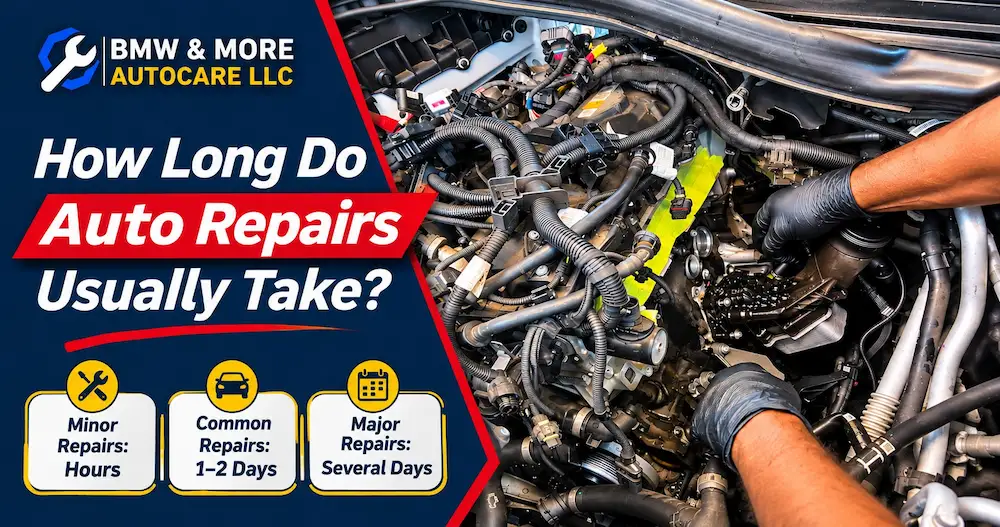
Getting a car back from the shop can be harder to predict than the repair itself. An oil change may take a short time, while an engine or transmission repair can keep a vehicle there for days. Even a repair that seems simple at first can take longer when a technician finds additional damage or has to wait for a specific part.
Auto repair timelines depend on several factors beyond the problem listed on the work order. Diagnosis, parts availability, vehicle make and model, shop workload, and repair complexity can all change the expected finish time. That is why two vehicles with similar problems may not leave the shop on the same schedule.
Understanding these factors makes the timeline easier to judge before the work begins. This guide explains what can affect repair time, how long common auto repairs usually take, and what you can do to help keep the process moving.
Why Repair Timelines Are Hard to Predict
No two repairs follow the same path, even when the symptoms look similar at first. Damage is often the biggest factor: a cracked bumper or grinding brake pad may be a quick fix, while worn rotors, a damaged disc brake, or a deeper suspension issue can become a more involved job. That is where repair timelines become harder to pin down because the real extent of the problem may only become clear once the vehicle is inspected.
Common Factors That Affect Auto Repair Time
Diagnostic Time
Modern cars rely on sensors and electronic systems, so a dashboard warning light does not always point to a simple problem. Finding the real cause may require technicians to use advanced scan tools and dig deeper into the vehicle’s systems, adding time before the repair can begin. That extra diagnostic step may seem like a delay, but identifying the root cause first can save you money by helping avoid unnecessary repairs.
Oil Changes and Routine Maintenance
An oil change and filter replacement often takes about 30 to 60 minutes, making routine maintenance one of the quicker shop visits. Jiffy Lube reports that an oil change can take 15 minutes or less, although waiting and adding services such as tire rotation, fluid checks, or spark plug replacement can extend the visit to 1 to 2 hours. Keeping up with these smaller services may take some time now, but skipping them can lead to bigger problems and longer repair times later.
Brake Repairs
Brake work is one of the most common repair jobs, but the time involved can change quickly once the wheels come off. A standard vehicle with disc brakes may take about 1 to 3 hours, while worn rotors or damaged calipers can push the repair to 4 hours or more.
Checking and repairing all four wheels can take most of a day, especially when several brake components need attention. An experienced shop can often diagnose the problem and complete the needed work more efficiently, giving you a clearer idea of how long the car may need to stay there.
Suspension Repairs
Suspension work can take 1 to 5 hours, and the exact timeline often becomes clearer only after technicians identify the worn or damaged components. Replacing a single strut or shock absorber may take a couple of hours, and a wheel alignment afterward can add another 1 to 2 hours.
Heating and Cooling System Repair
Heating and cooling problems can take very different amounts of time to resolve, depending on what is actually failing. A refrigerant recharge may take less than an hour, while heater core or radiator work can take 2 to 8 hours, especially when reaching the component requires dashboard removal.
A compressor problem, refrigerant leak, or overheating issue can require a longer diagnosis and potentially a full day of repair, while AAA reports that 77% of shops frequently see drivers skip coolant maintenance.
Engine Repairs
Engine repairs can shift from a short shop visit to several days once the problem becomes more complicated. A minor issue, such as a thermostat problem or oil leak, may be handled within a few hours. More involved work, including a head gasket or timing chain repair, can take 1 to 3 days or longer when the diagnosis is complex.
Major engine work or a complete replacement may keep the vehicle in the shop for a week or more. Experienced technicians can reduce guesswork during diagnosis, helping limit unnecessary delays and downtime.
Transmission Repairs
Transmission work often takes longer to estimate because repair time depends on both the diagnosis and access to the right parts. A basic fluid service may take only an hour or two, but a rebuild or replacement can keep the vehicle in the shop for 3 to 5 days or longer when damage is extensive, or parts are delayed.
AAA reports that 81% of shops frequently see drivers skip transmission-fluid maintenance, which can make an already complicated repair more likely. Experienced technicians can help reduce unnecessary delays by identifying the problem accurately and handling the repair with the right approach.
Parts Availability
The repair itself may be straightforward, but waiting for a part can quickly change how long the car stays in the shop. Common items such as filters and brake pads are often available the same day, while parts for imported or older vehicles may need to be ordered before the work can continue.
That delay has less to do with the technician and more to do with finding the correct part for the vehicle. Clear communication from the shop about parts orders and expected delays can give you a more realistic repair timeline.
Vehicle Make and Model
The badge on your car can tell you more about the repair timeline than you might expect. Luxury, hybrid, and foreign models can take longer when they need specialized tools or less common parts, while familiar domestic models often move faster because the required parts and equipment are easier to access.
Shop Workload and Scheduling
Shop workload can change a repair timeline even when the work itself is straightforward. Busy periods may require advance scheduling, so calling ahead or booking online can help secure a spot, while urgent repairs are often moved higher on the schedule for a faster turnaround.
Typical Timeframes for Common Auto Repairs
Oil Change: Usually takes 30 to 45 minutes with no added service.
Tire Replacement: Typically takes around 1 hour.
Brake Pad Replacement: Usually takes 1 to 2 hours when other brake parts are fine.
Suspension or Steering Repair: Can take 1 to 3 days, depending on the repair.
Engine Repair: Often takes 2 to 5 days, based on the work required.
Transmission Replacement: Can require 3 to 7 days of shop time.
Electrical Diagnosis and Repair: May take 1 to 3 days, depending on the fault.
What to Expect When You Book an Auto Repair
1. Initial Contact
Call or book online, explain the vehicle’s symptoms, and choose an appointment time that works.
2. Inspection and Diagnosis
Technicians inspect the vehicle with the right diagnostic tools, explain what they find, and recommend the needed repairs.
3. Approval and Repair
Once the estimate is approved, the repair begins, with updates provided as the work moves forward.
4. Final Check and Pickup
After the repair, we test the vehicle, review the completed work, and explain any warranty details before pickup.
What You Can Do to Speed Things Along
Repair time can sometimes be shortened before the vehicle even reaches the repair bay. Sharing clear symptoms at the start gives technicians more information, while quick replies to calls and approval requests help prevent unnecessary pauses.
Asking about hard-to-find parts early can also reveal possible delays and give the shop time to look for faster options. Regular maintenance matters for the same reason, since small issues are usually easier and quicker to address before they become major repairs.
Conclusion
Auto repair time is rarely as simple as looking at the problem and picking several hours. A routine oil change may finish quickly, while engine, transmission, electrical, or suspension work can take several days, depending on the diagnosis, parts, vehicle, and shop schedule.
Knowing what can affect the timeline makes an estimate easier to understand. Instead of focusing only on the repair itself, consider what could happen around it, from finding the root cause to waiting for a specific part or completing the final checks.
A realistic timeline starts with a proper inspection and clear communication. Sharing symptoms, responding to the shop, asking about parts, and keeping up with routine maintenance can help avoid delays and make the repair process easier to manage.